





The Beauty of a Thoughtful Thanksgiving Table
A considered guide to creating a celebration that feels warm, personal and beautifully your own
Thanksgiving has always been about gathering.
It is a day shaped by familiar recipes, generous servings and conversations that continue long after the meal is over. At the centre of it all is the table—not simply as a place to dine, but as the setting where people reconnect, stories are shared and new memories begin.
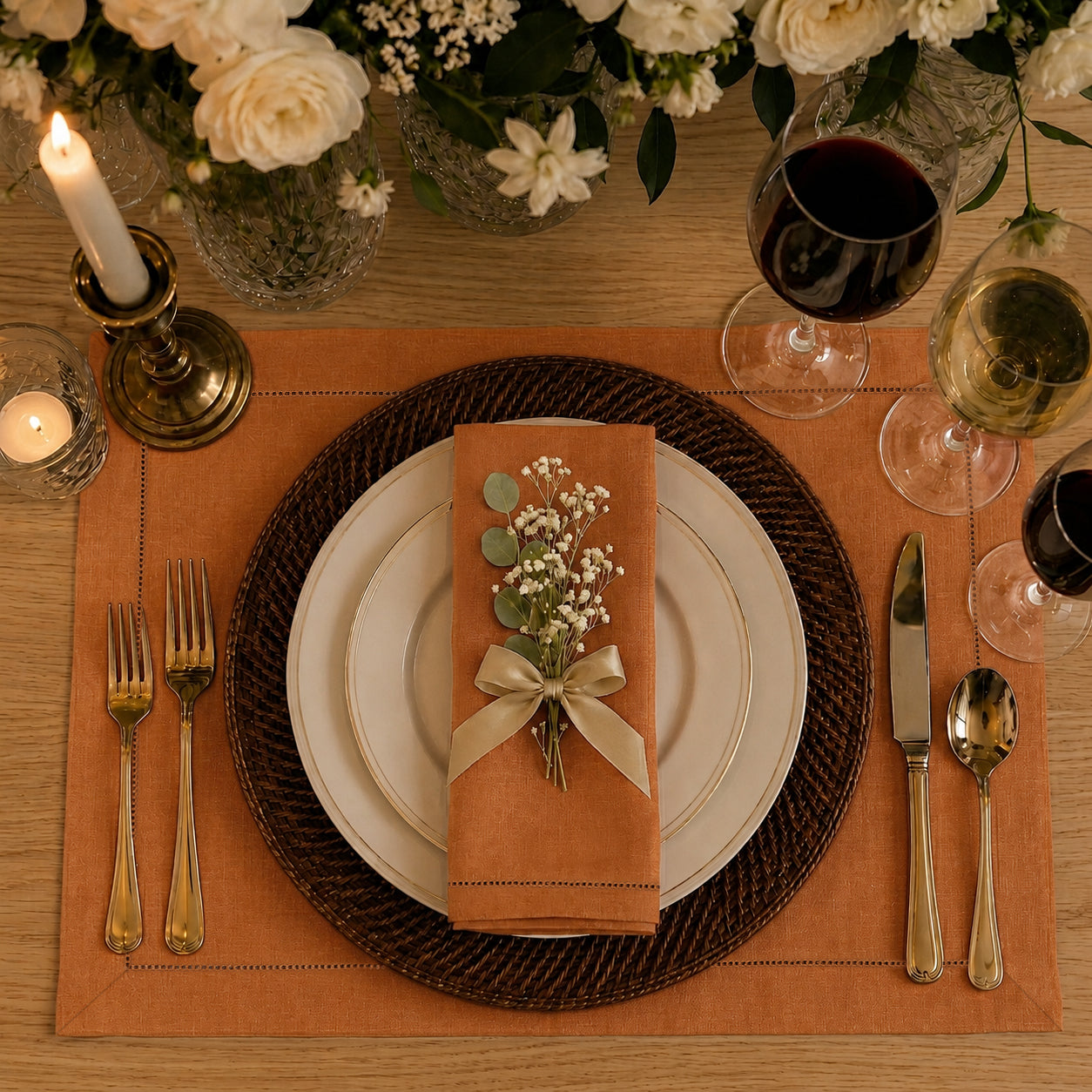
Creating a beautiful Thanksgiving table does not require an elaborate theme or an extensive collection of seasonal décor. The most memorable settings often begin with just a few thoughtful elements: natural linen, familiar tableware, seasonal branches or fruit and the soft glow of candlelight.
The aim is not to create a table that feels overly styled or too precious to enjoy. It is to create one that feels welcoming, personal and ready to be lived in.

Begin With the Feeling
Before choosing flowers, folding napkins or arranging place settings, consider how you want the gathering to feel.
Perhaps you imagine a relaxed afternoon that gradually stretches into evening, with shared platters passing from hand to hand. Maybe your celebration is more traditional, with polished glassware, handwritten place cards and a quiet sense of occasion. Or perhaps it is an intimate Friendsgiving filled with comforting food, mismatched chairs and lively conversation.
Let that feeling guide every decision.
A more formal table can be shaped by symmetry, tailored details and a restrained palette. A relaxed gathering may call for softer folds, collected ceramics and organic forms. A modern table might leave more open space, allowing a few sculptural objects to make a stronger impression.
The table should reflect the way you genuinely want to host—not an image of perfection that makes everyone afraid to touch anything.

Let the Linen Set the Tone
Linen creates the visual foundation from which the rest of the table can unfold.
Its natural texture softens hard surfaces, gives definition to individual place settings and lends even familiar dinnerware a renewed sense of occasion. It can make a table feel considered without making it feel formal.
The finish you choose can subtly influence the character of the setting.
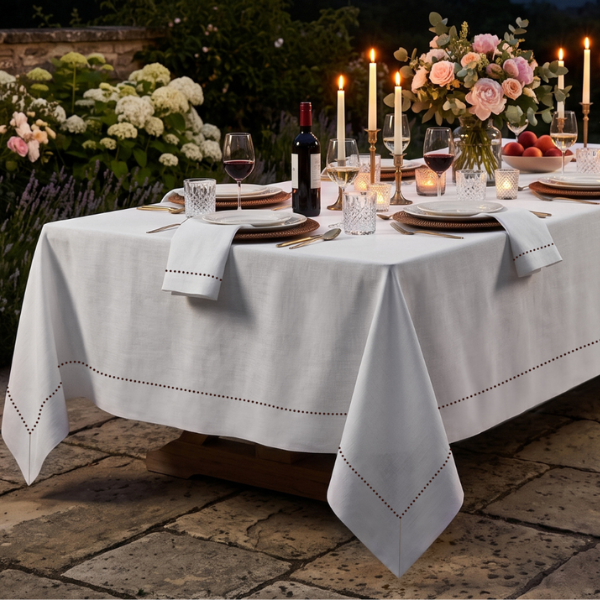
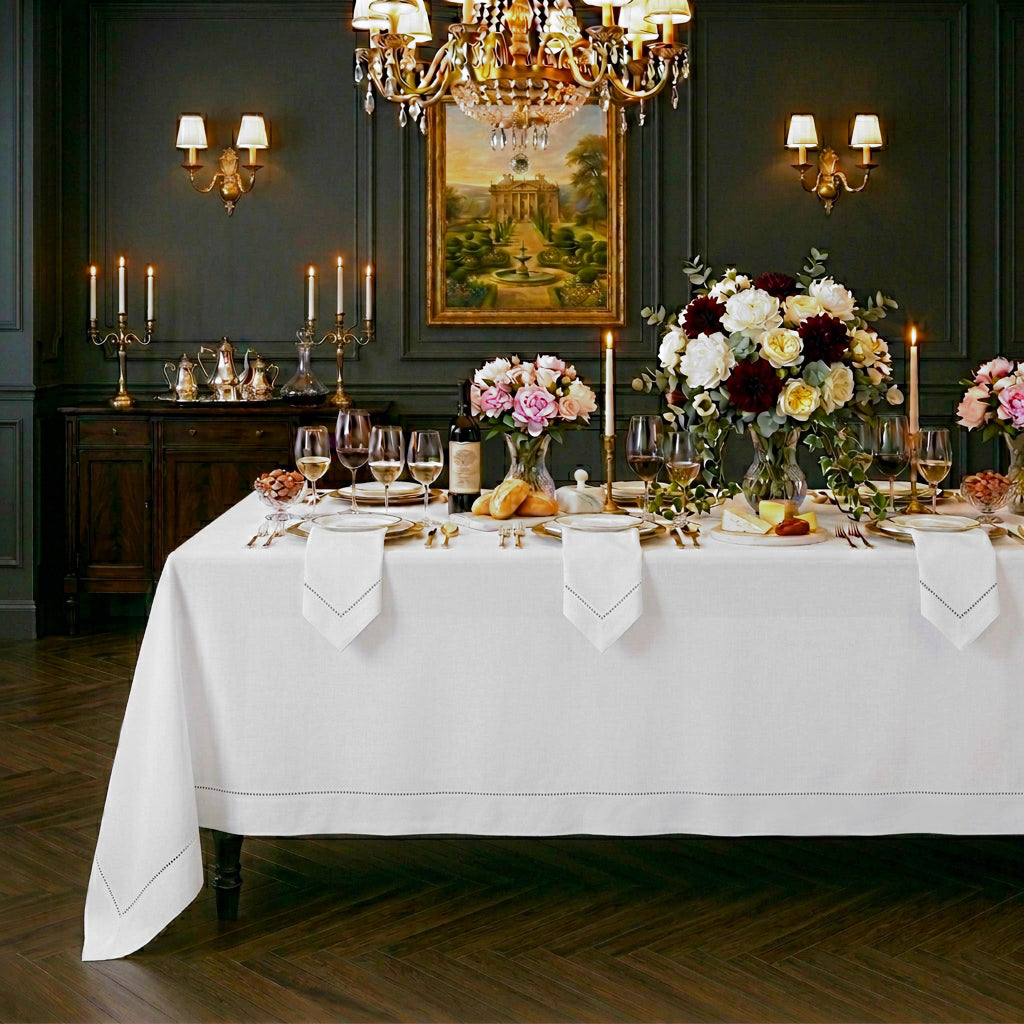
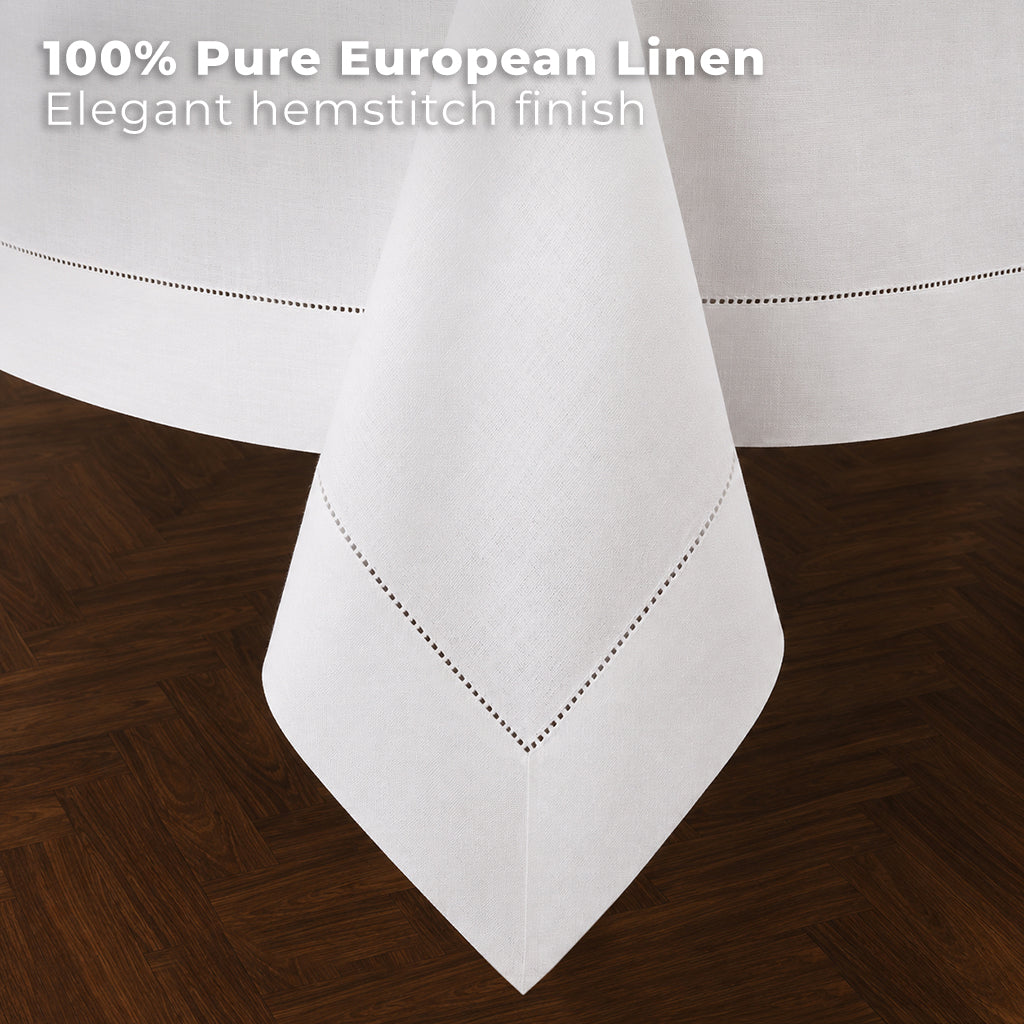
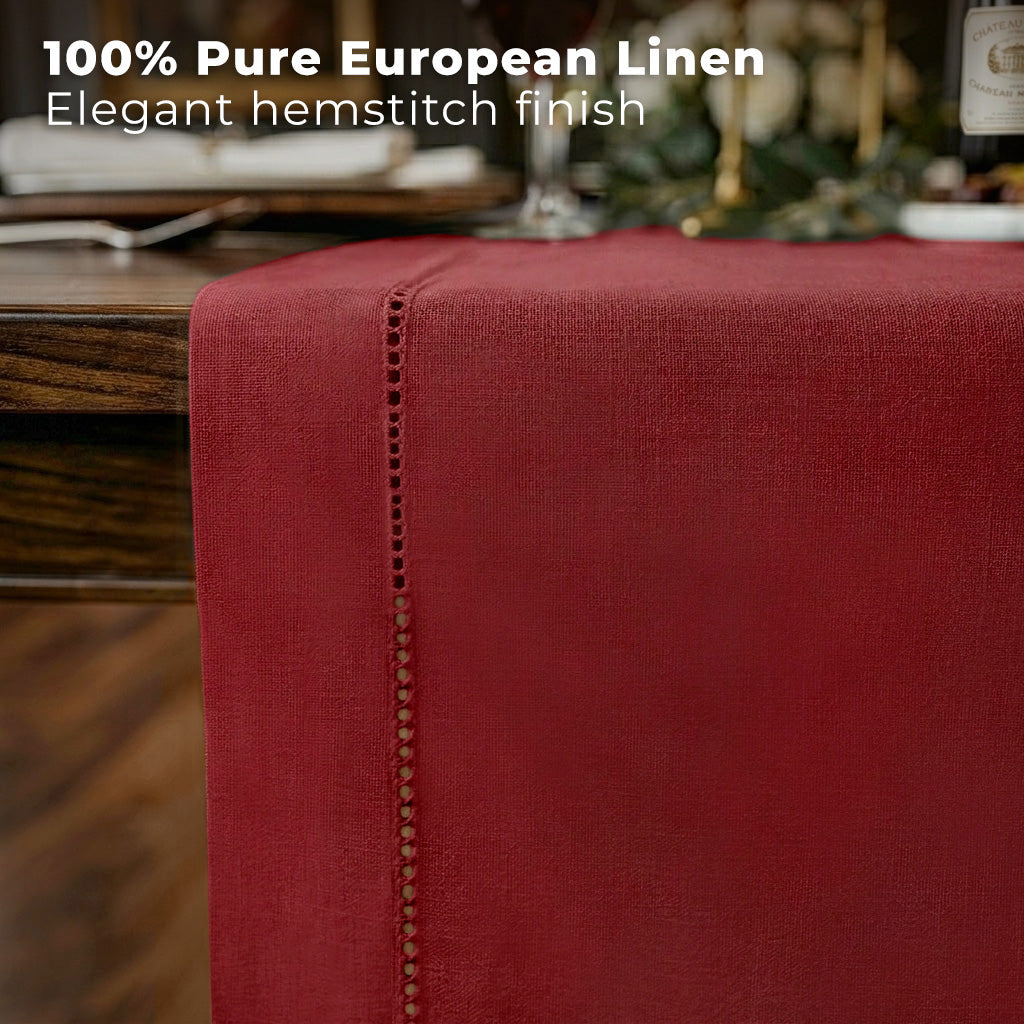
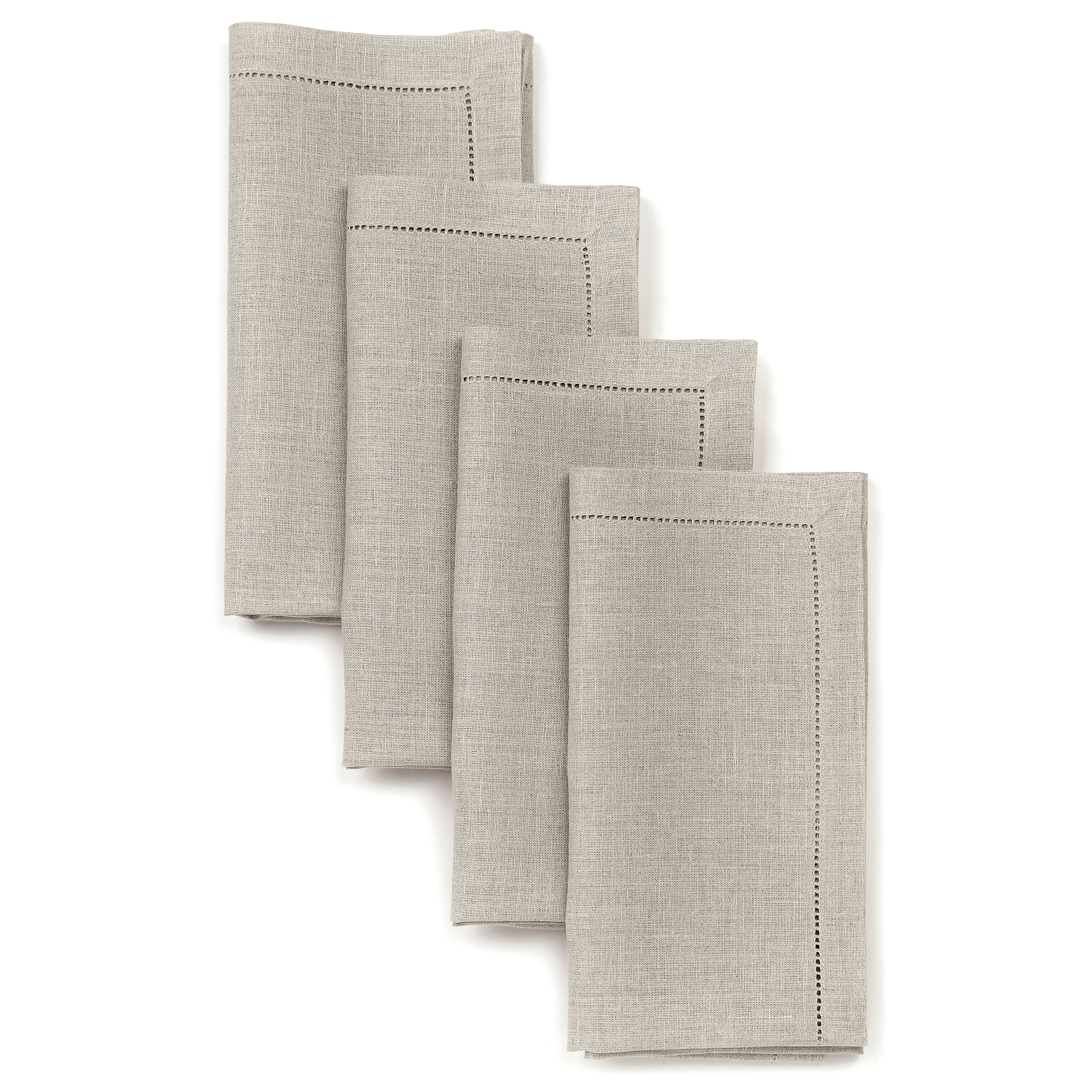
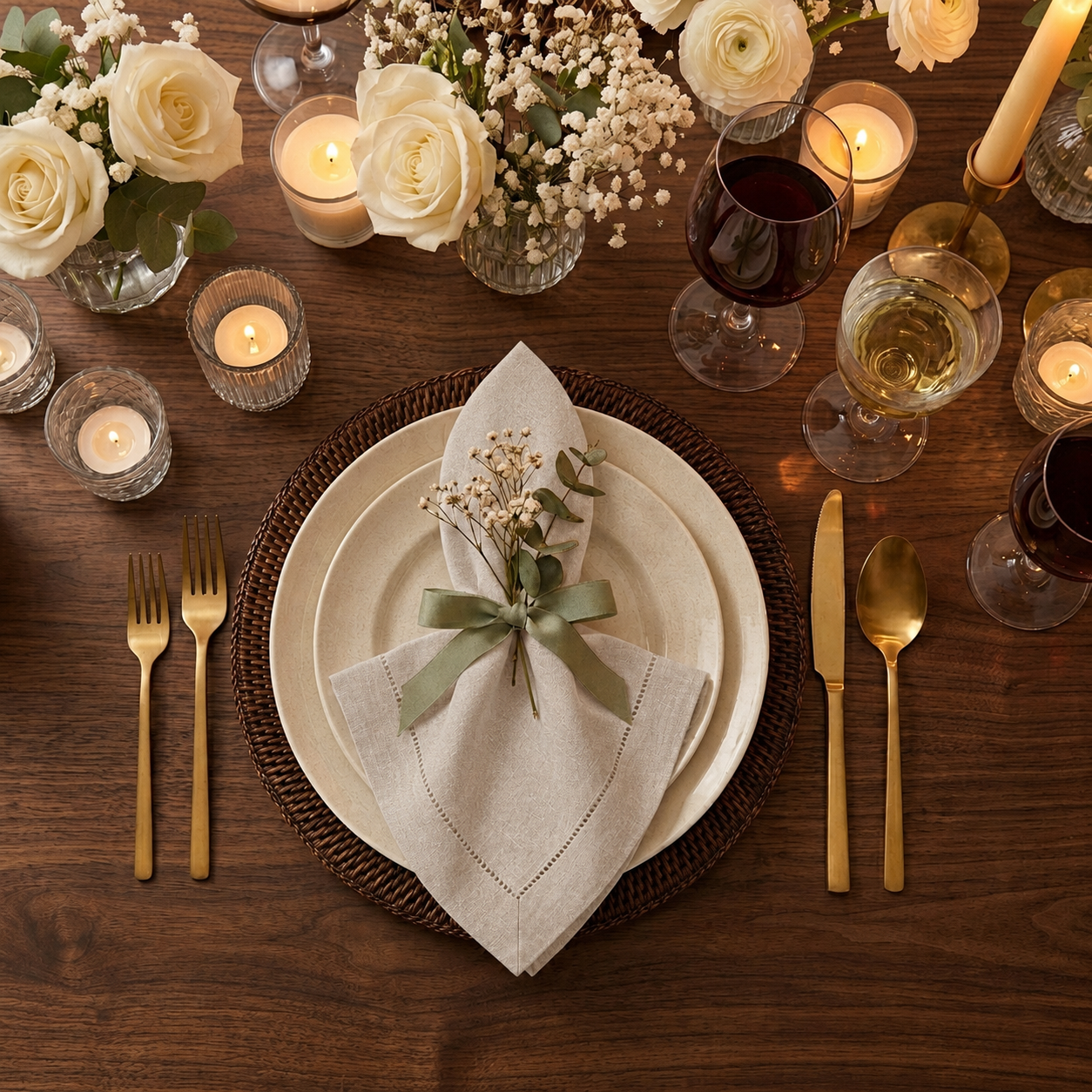
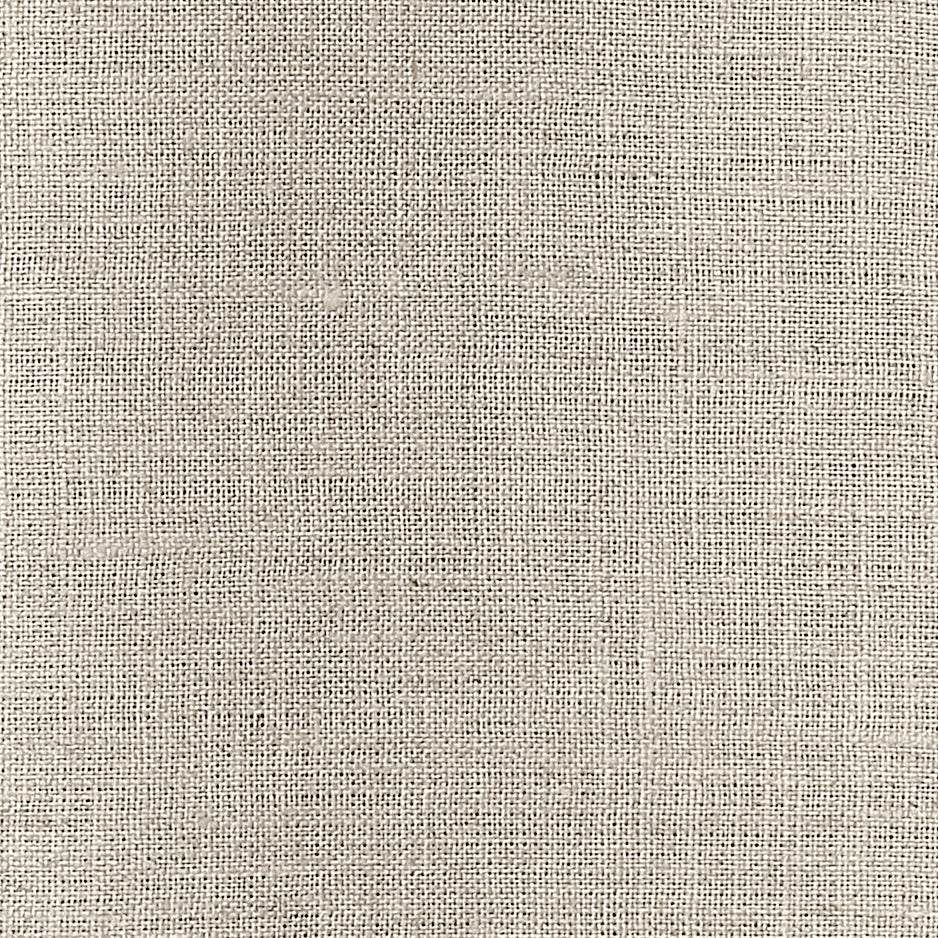
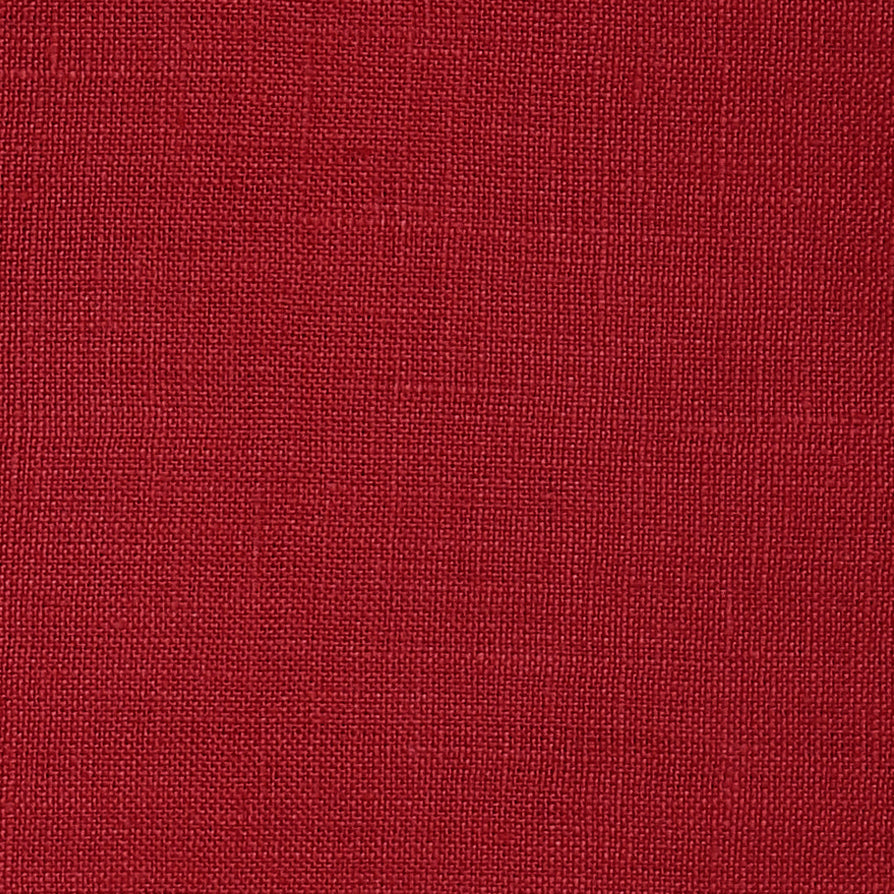
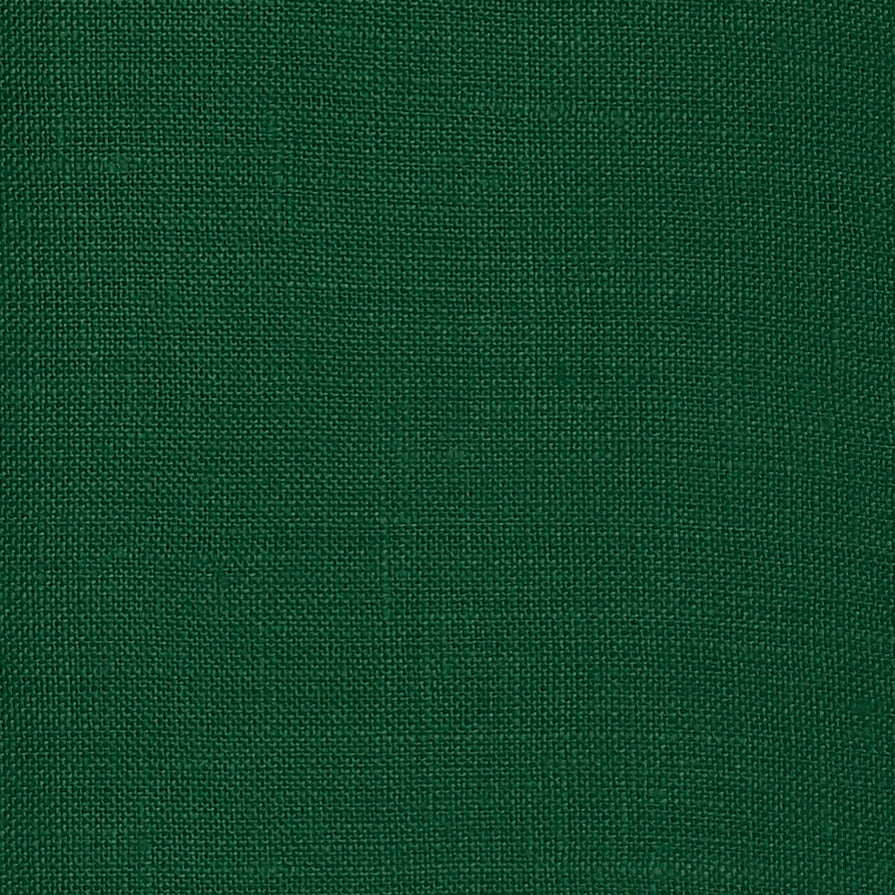
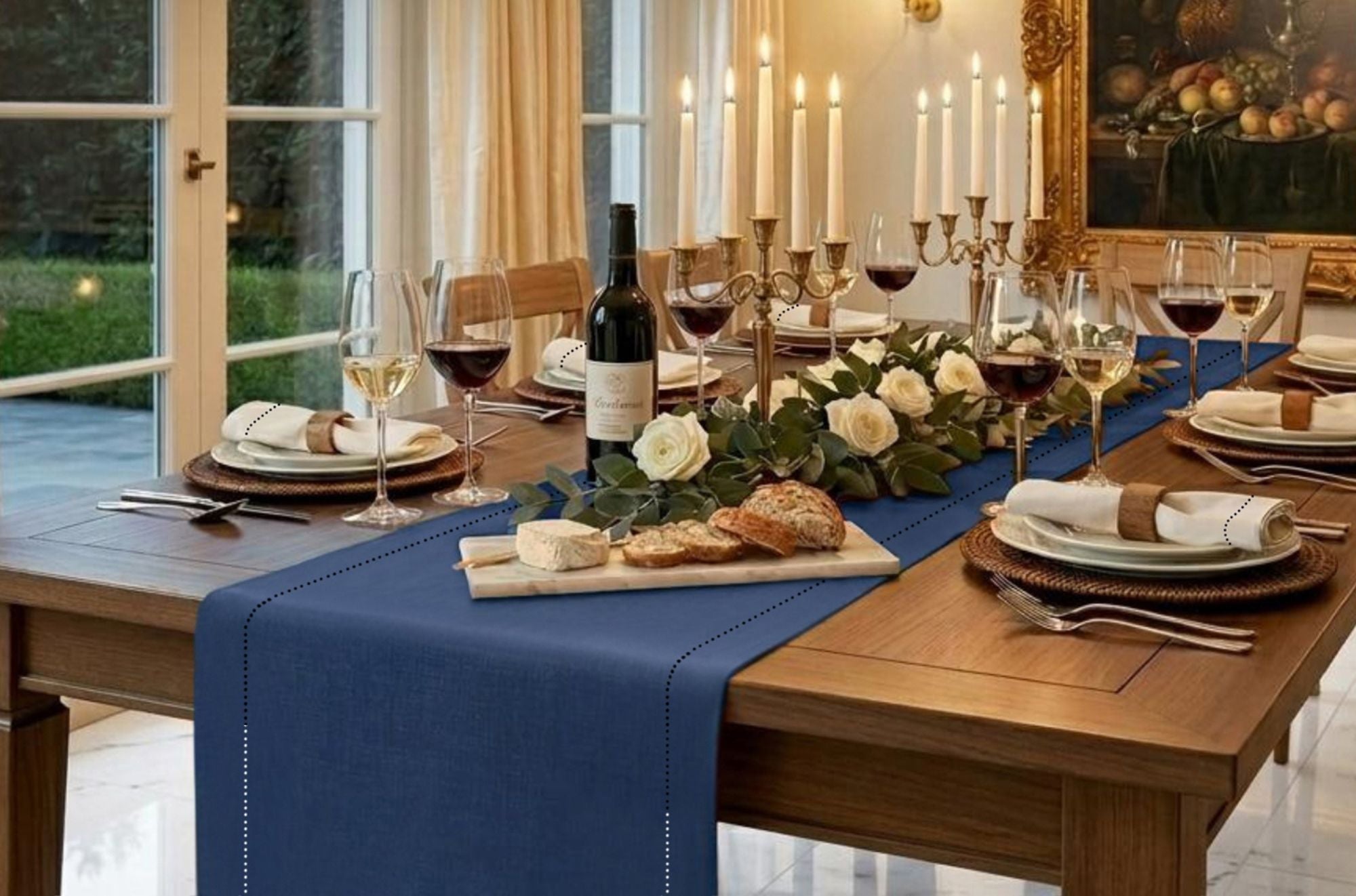
A hemstitched edge, like the one found on our Signature Linen, brings a light and graceful detail to the table. It works beautifully when the mood is soft and layered: ivory ceramics, delicate glassware, garden foliage and candles in quiet tonal shades.

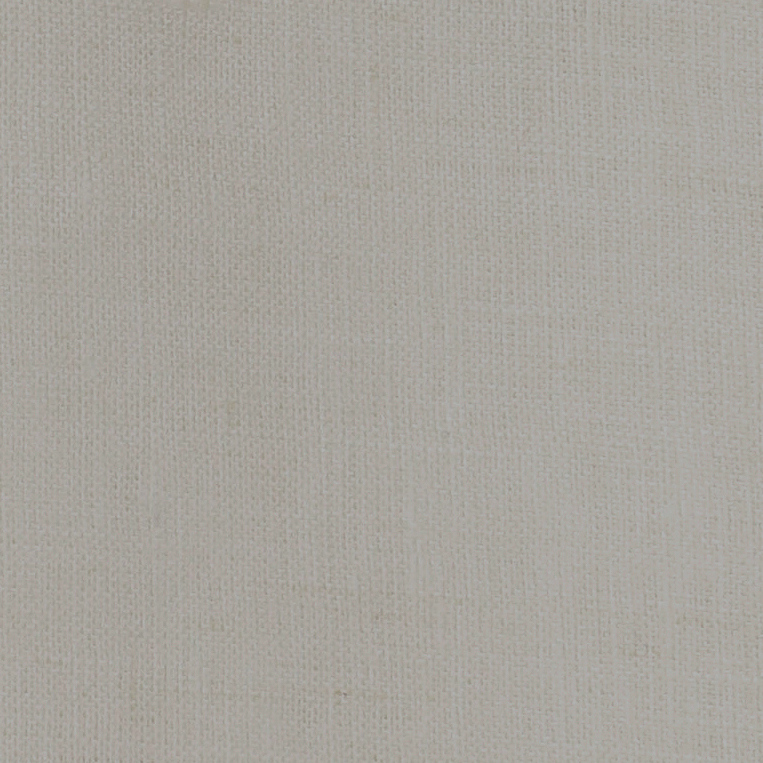
A mitered corner, as seen on our Classic Linen, feels slightly more tailored. Its clean geometry complements structured arrangements, contemporary tableware and settings where simplicity is part of the statement.

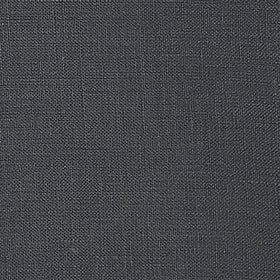
Each finish brings its own character to the table—one softly detailed, one clean and tailored, and one with a gentle sense of sheen and occasion.
From there, the table becomes entirely your own.
Choose a Palette, Not a Theme
Thanksgiving does not have to mean covering the table in pumpkins, leaves and predictable shades of orange.
A more considered approach begins with a limited palette of three or four tones. Repeating those colours through the linen, tableware, flowers and candles creates a sense of harmony without making the table feel overly coordinated.
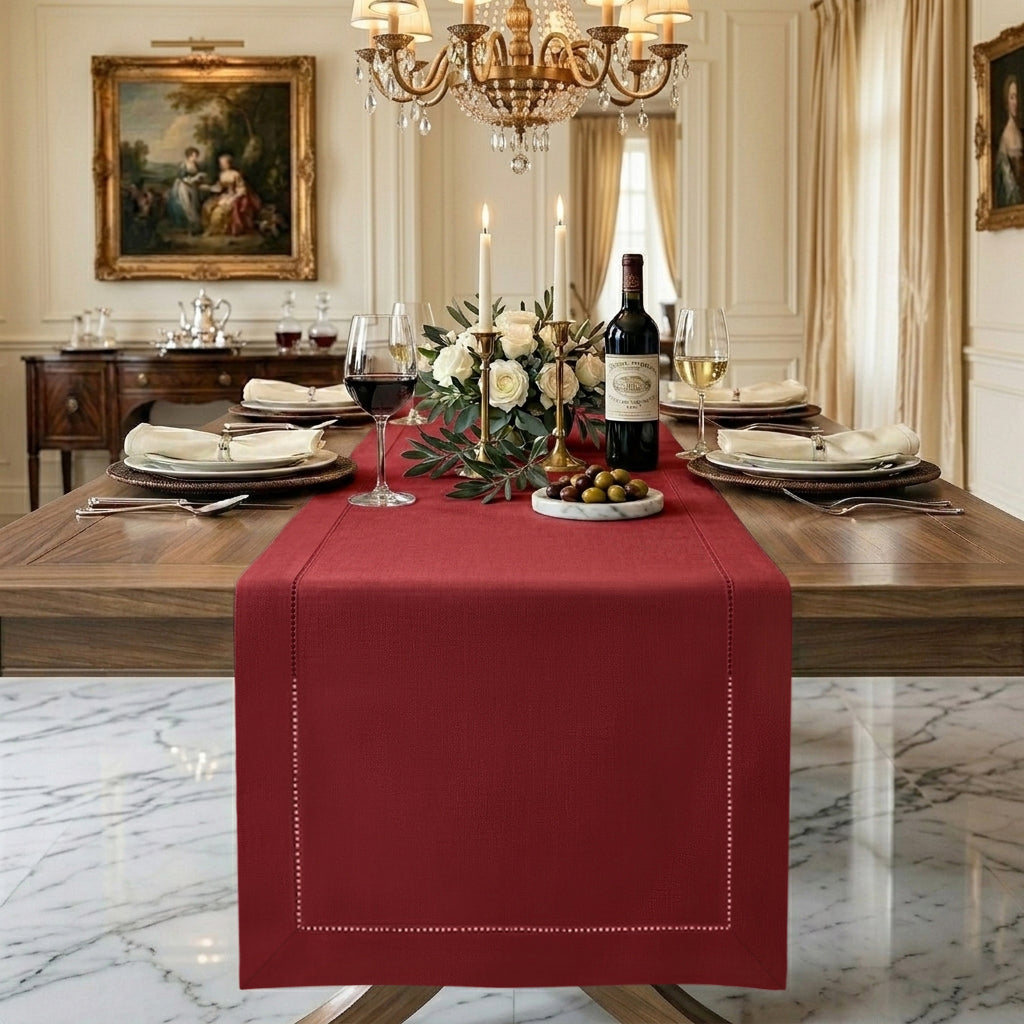
For something richer, begin with natural linen and layer in merlot, fig, chocolate and antique gold. A few deep-toned napkins or taper candles can transform pieces you already own.

For a modern interpretation, work with ivory, charcoal and clear glass. Introduce warmth through candlelight, dark fruit or a single wooden serving board placed at the centre.

The most successful palettes also leave room for the food. Thanksgiving dinner is naturally abundant and colourful; the table does not need to compete with it.
Build the Table in Layers
A beautifully layered table should feel collected rather than crowded.
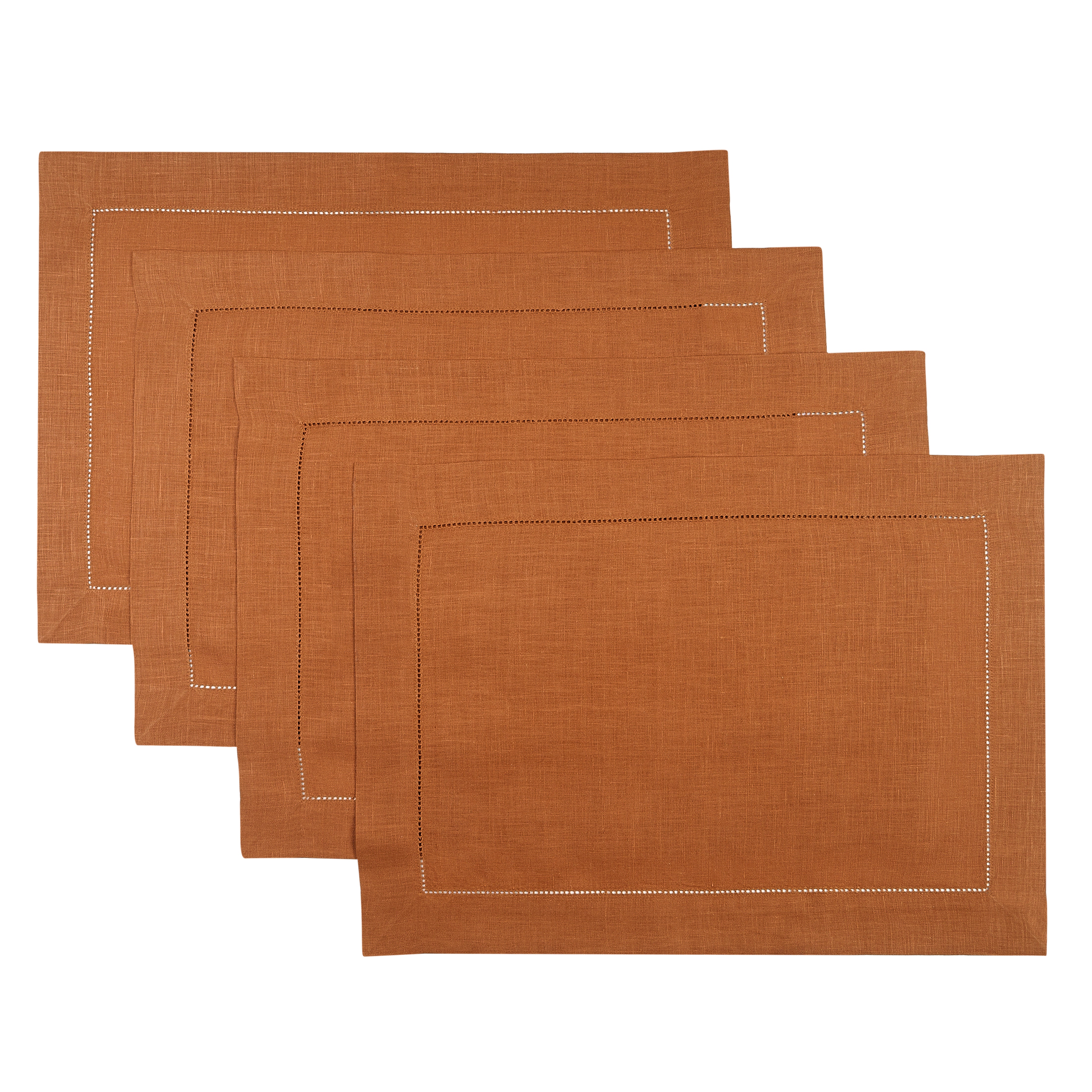
Begin with the foundation. A full tablecloth lends softness and a sense of occasion, while a runner allows more of the table’s natural character to remain visible. Placemats create definition around individual settings and work especially well when food will be served family-style.

There is no rule that requires every linen element to be used at once.
A tablecloth and napkins may be all a traditional setting needs. On a more casual table, placemats and loosely folded napkins can create enough texture without additional decoration. A runner can become the visual path for candles, branches and serving dishes.

Next, add the pieces guests will actually use: plates, flatware, glassware and napkins. Decorative elements should come afterwards.
This order matters. A table can look beautiful in a photograph and still be uncomfortable to dine at. Leave enough room for glasses to be lifted easily, dishes to be passed and elbows to rest without disturbing the arrangement.
Luxury is not simply how a table looks. It is how effortlessly it allows the evening to unfold.
Create a Centrepiece That Encourages Conversation
The centrepiece should bring the table to life without becoming its main character.
Keep arrangements low enough for guests to see one another comfortably. Instead of one large floral display, consider a series of smaller moments: a bowl of seasonal fruit, several bud vases, a loose line of foliage or taper candles at varying heights.
Thanksgiving offers some of the most beautiful natural materials of the year. Branches, herbs, pears, figs, pomegranates, artichokes and miniature gourds can all become part of the arrangement. Their natural irregularity keeps the table from feeling too styled.
Try placing a few branches down the centre and allowing them to curve naturally rather than forcing perfect symmetry. Nestle fruit between candleholders. Use small vessels you already own instead of searching for an exact matching set.
The result should feel generous, but never obstructive.
When candles are part of the arrangement, choose unscented ones for the dining table. The fragrance of the meal deserves the room.

Use Candlelight Generously
Few elements can change the atmosphere of a table as quickly as candlelight.
It softens the entire setting, adds movement and makes even a simple arrangement feel more intimate. A combination of taper candles and small votives creates different points of light without requiring an elaborate centrepiece.
For a polished look, repeat one candle colour throughout the table. Ivory is timeless, while oxblood, moss or deep brown can add understated drama.
Candleholders do not need to match. Brass, glass, ceramic and dark metal can sit together beautifully when their proportions feel balanced.
Before guests arrive, light the candles and dim any harsh overhead lighting. A room almost always feels more welcoming when light comes from several gentle sources rather than one bright fixture above the table.

Make Each Place Feel Personal
The smallest gestures are often the ones guests remember.
A handwritten name card signals that someone’s presence was anticipated. A sprig of rosemary tucked into a napkin adds colour without requiring a formal arrangement. A small note of gratitude placed at each setting can become a meaningful part of the evening.

Napkins can be folded neatly for a tailored table or arranged more loosely for a relaxed one. A simple knot, an understated napkin ring or a fold beneath the plate is often enough.

Avoid adding details simply to fill space. One thoughtful gesture carries more warmth than several decorative objects with no connection to the gathering.
Allow a Little Imperfection
A table should feel prepared, but it should also feel alive.
Linen does not need to appear rigid or overly pressed. Its gentle texture can make the setting feel more natural and inviting. Chairs do not have to match. Glassware can be collected rather than identical. A serving bowl passed down through generations can sit comfortably beside a contemporary plate.
These contrasts give the table history and personality.
The goal is not to recreate a showroom. It is to create a room in which guests feel comfortable staying for another helping, another story and another hour.
Prepare Early, Then Let Go
The most graceful hosting often begins the day before.
Set the table in advance, leaving only fresh flowers, food and candle-lighting for Thanksgiving Day. Place serving dishes where you intend to use them to make sure there is enough space. Check that chairs move comfortably and that guests can reach shared platters.
Press or steam linens ahead of time, polish glassware and gather matches, trivets and serving utensils in one place. These practical details may not be visible, but they create the sense of ease guests experience.
Once everyone arrives, resist the urge to keep adjusting the table.
A spilled drop, a shifted napkin or an extra chair pulled into place is not a disruption of the setting. It is evidence that the gathering has begun.
The Table Is Only the Beginning
The beauty of a Thanksgiving table is not measured by how closely it follows a trend or how many decorative elements it contains.
It is found in the atmosphere it creates.
In linen chosen with care. In candlelight reflected across glass. In a place made ready for every guest. In plates that gradually empty and conversations that continue long after dessert has been served.
Begin with a few timeless pieces. Add what feels personal. Leave space for the meal, for movement and for one another.
Because the most beautiful Thanksgiving table is not the one that remains untouched.
It is the one around which no one is in a hurry to leave.
Continue reading