




This Halloween, let the linens set the mood, then layer in candlelight, seasonal color and just enough mischief.

Halloween is one of the few occasions when the table can afford to be a little theatrical. Black becomes neutral, rust feels richer than orange, candlelight is almost essential, and the smallest unexpected detail—a miniature skeleton beside a plate or a spider tucked near a napkin, can completely change the mood.
But a memorable Halloween table does not have to begin with decorations. Start instead with the surface beneath them.
A tablecloth can envelop the table in color. A runner can create a path for candles and seasonal objects. Placemats can frame each setting, while napkins bring color and texture directly to the plate. Once the linens establish the palette, everything else becomes much easier to compose.
The result can be playful without feeling busy, dramatic without becoming theatrical, and unmistakably Halloween without relying on every familiar symbol of the season.
Start With Rust or Black
Halloween may traditionally belong to orange and black, but slightly more nuanced versions of those colors can make the table feel far more considered.
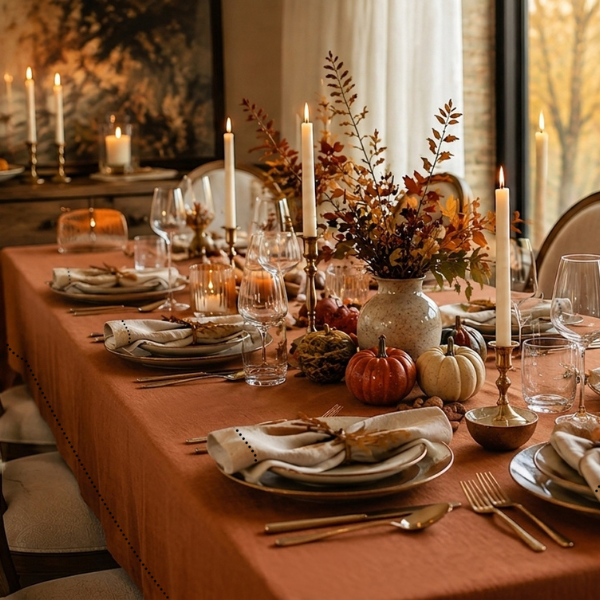
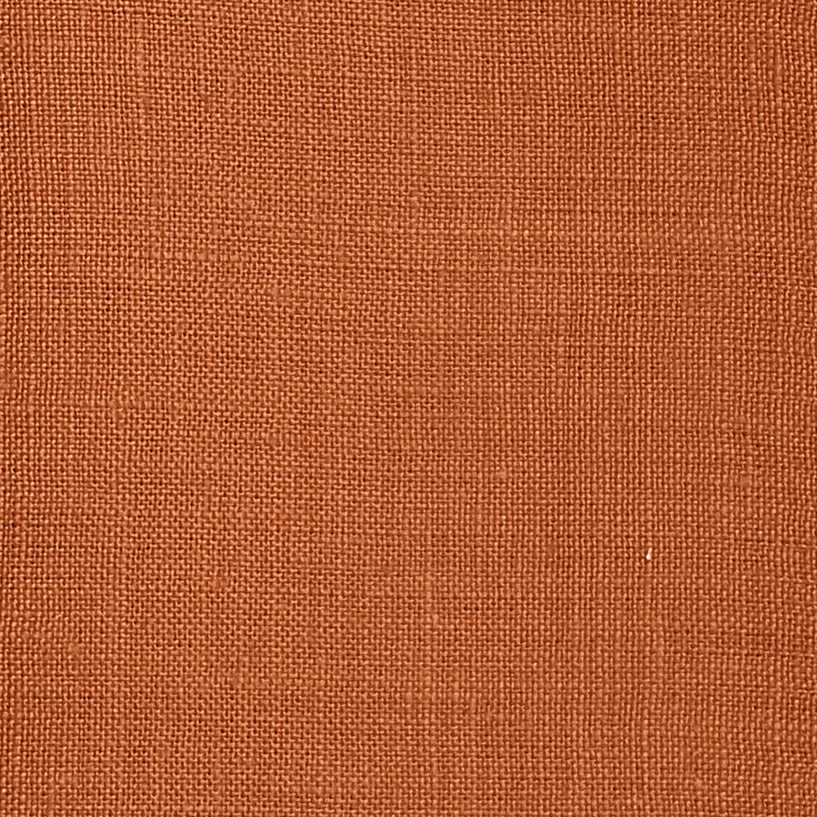
Rust carries all the warmth of autumn without the brightness of classic pumpkin orange. Against natural wood, cream ceramics and brass, it feels earthy and inviting. Add black accents and deeper burgundy flowers, and the color becomes noticeably moodier.

A full rust tablecloth creates the strongest expression. Because the linen already introduces so much color, the objects above it can remain relatively restrained: ivory pumpkins, aged candlesticks, dark florals and a few sculptural Halloween pieces are enough.
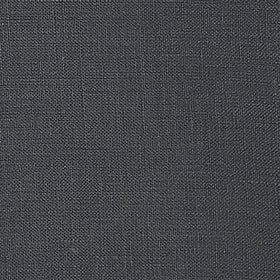
Black creates almost the opposite effect. Instead of warmth, it gives the table depth. Pale dinnerware appears brighter against it, glass catches more light, and brass or silver details suddenly become much more noticeable.

For evening entertaining, especially outdoors, black linen can become almost architectural. As daylight disappears, the table seems to recede while candles, glassware and lighter elements begin to glow.
You Don’t Need a Tablecloth to Transform the Table
Leaving part of the table exposed can create an entirely different look.
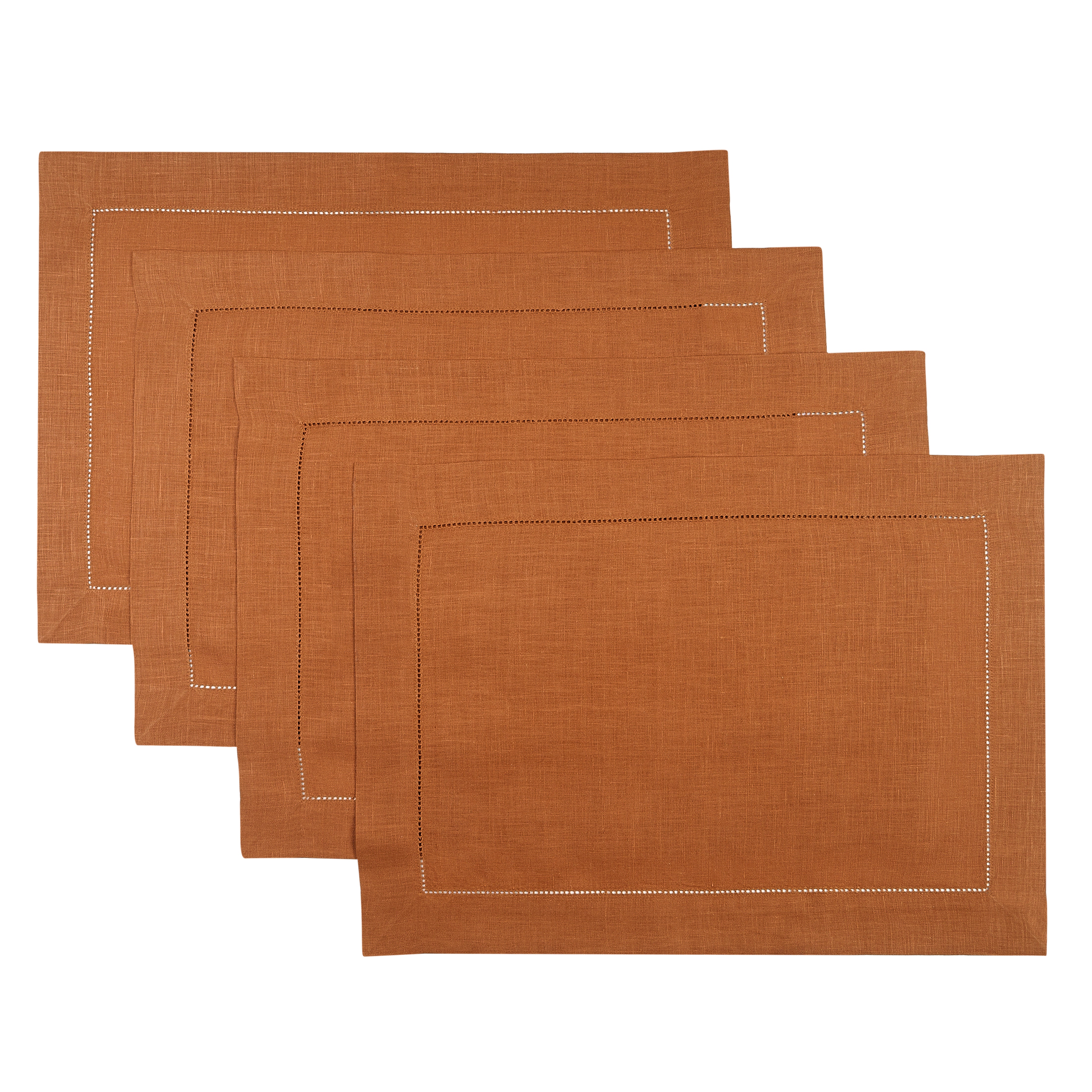
Placemats are particularly effective when the natural wood itself is beautiful. They introduce color and structure without covering the entire surface, defining each guest’s place while allowing the character of the table to remain visible.

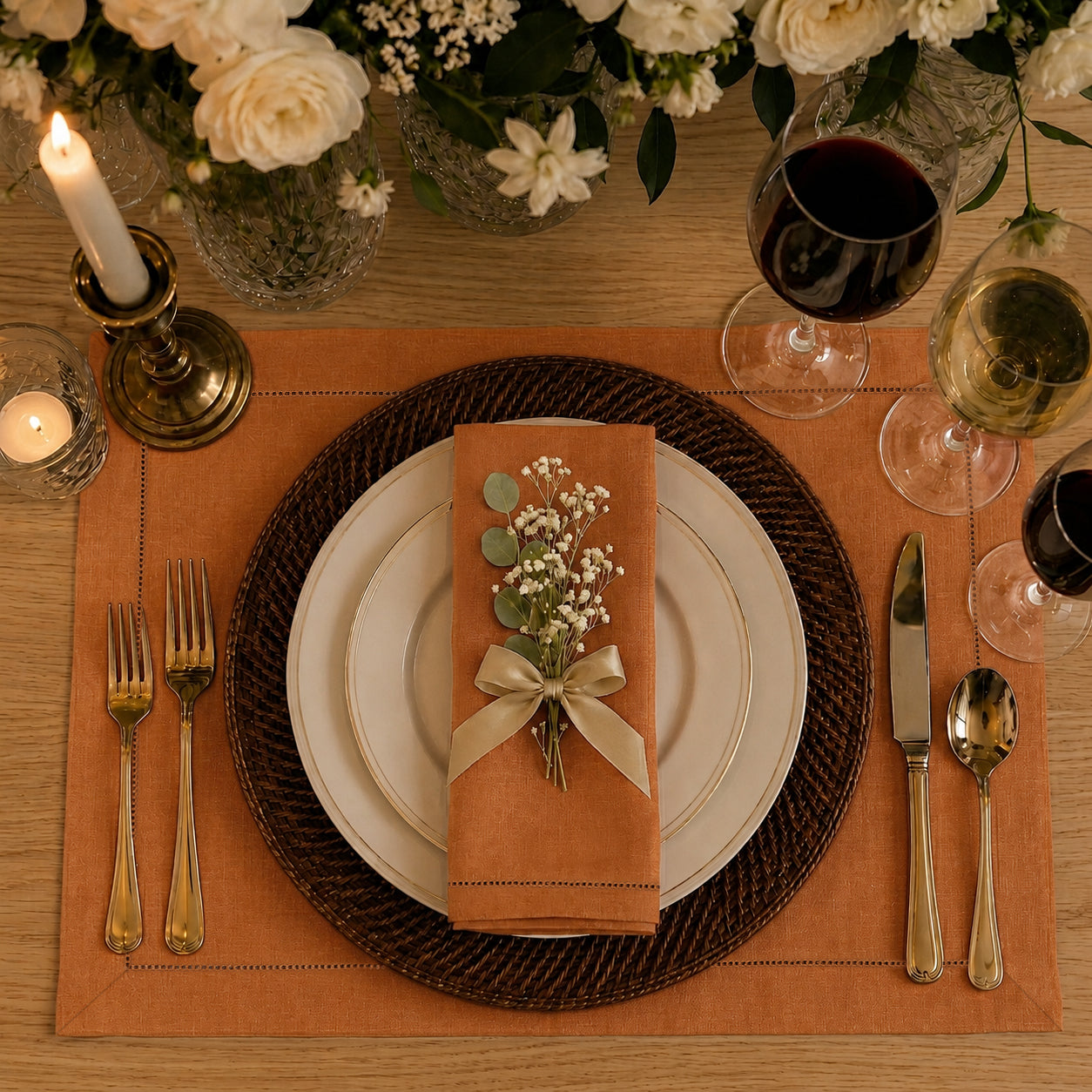
Rust placemats against dark wood create warmth immediately. Repeating the same tone through napkins makes the table feel cohesive, while white plates and gold flatware keep the palette from becoming too heavy.
For a darker version, use black placemats and black napkins.

The effect is sharper and more evening-focused. Black roses, deep wine tones and taper candles can then carry the Halloween mood through the center of the table without every object needing to be themed.
It is a useful reminder that the linen itself can be part of the decoration.
Let the Runner Lead the Eye
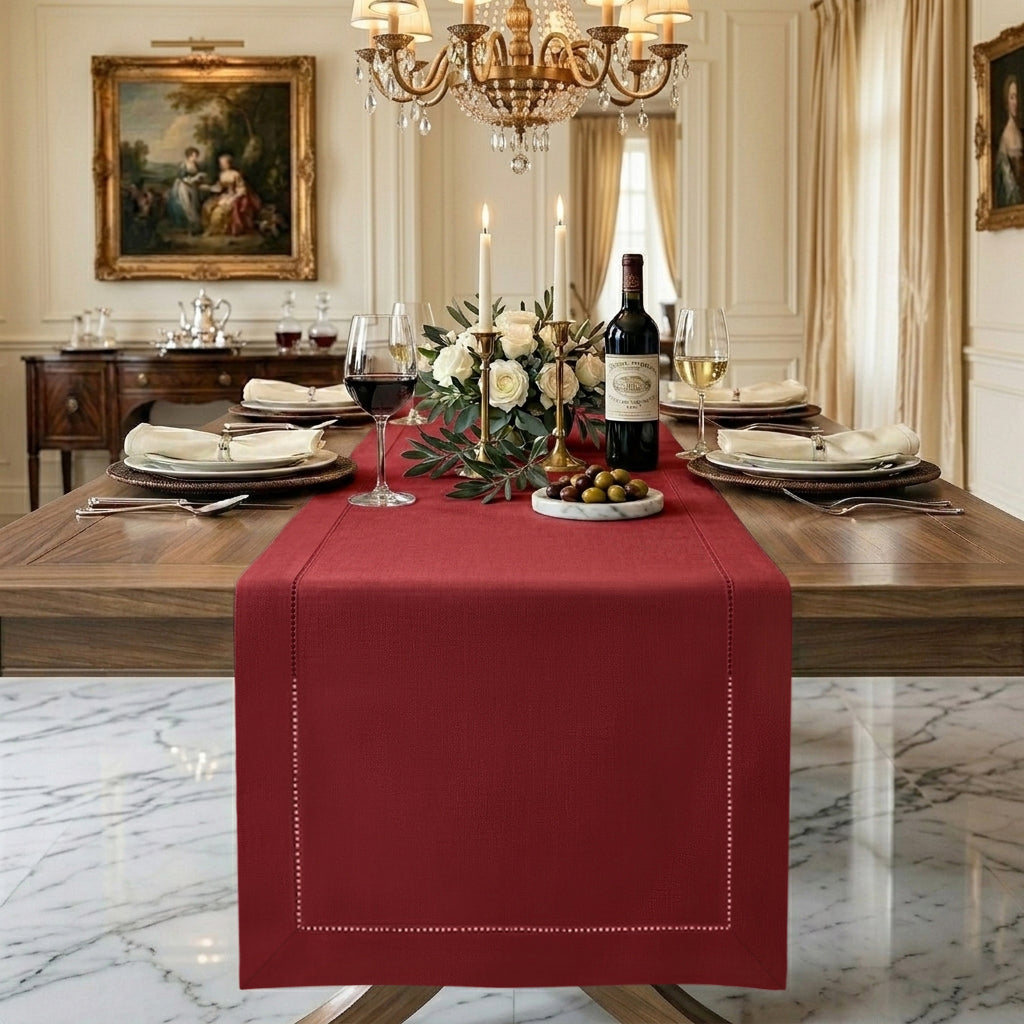
A table runner is perhaps the easiest way to create a Halloween tablescape without completely redressing the dining table.
Instead of covering the entire surface, it creates a central line around which everything else can be arranged. Candles, flowers, pumpkins and small decorative objects naturally follow its direction, giving the table a sense of order even when the styling itself is intentionally irregular.

Rust works particularly well here because it sits beautifully against warm timber. Pair it with black roses, cream and black pumpkins, brass candlesticks and a few smaller Halloween details.
Keep some of the table visible on either side. The contrast between linen and wood adds another layer of texture and prevents the setting from feeling overdecorated.

Make the Napkin Part of the Decoration
One of the smallest pieces of linen on the table can carry an extraordinary amount of personality.
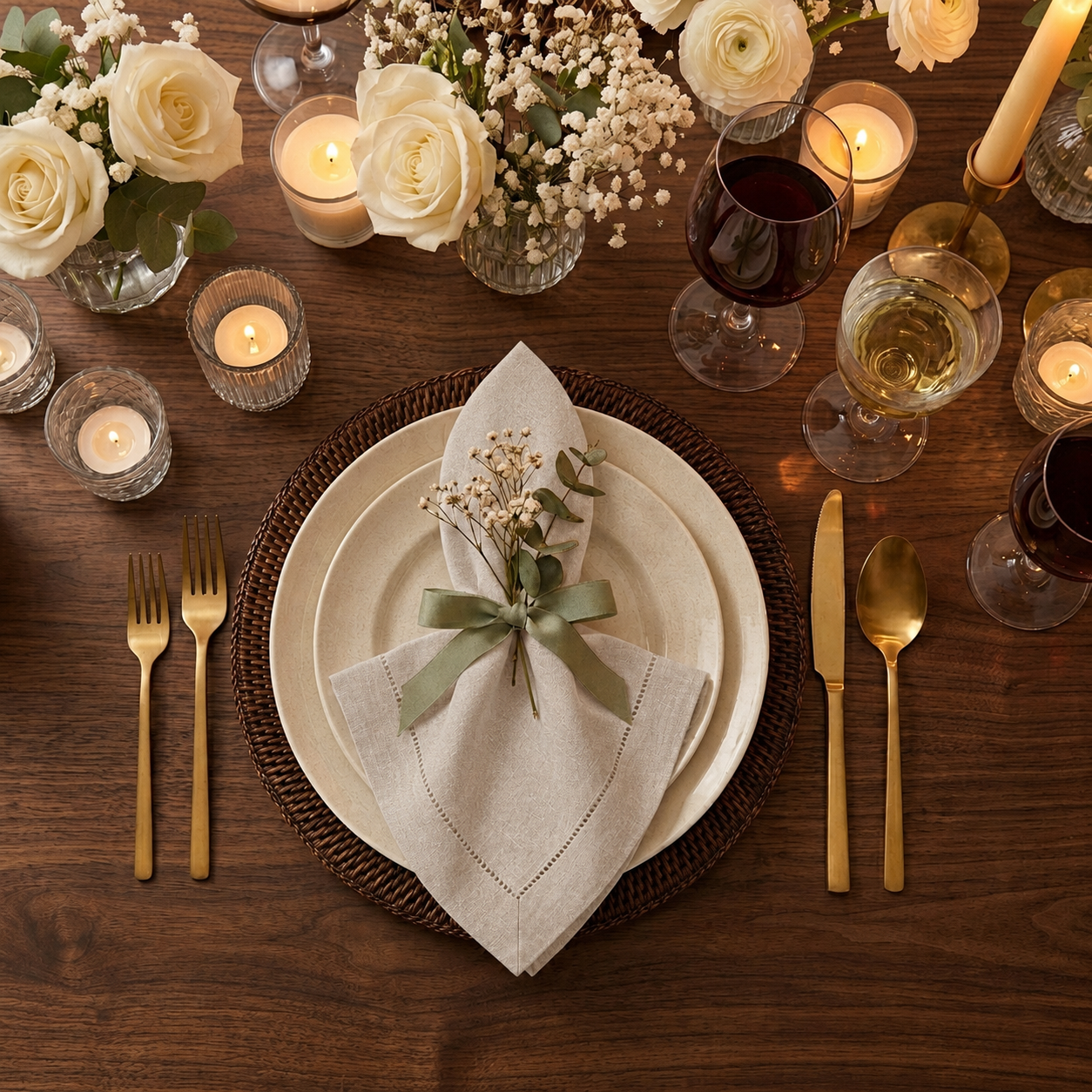
A rust napkin against cream dinnerware brings autumn color directly into each individual place setting. Rather than using an elaborate fold, allow the fabric and finishing to remain visible and add one small decorative detail.

A piece of natural cord, a black floral accent or a tiny seasonal ornament can be enough. Against woven chargers and warm metallic flatware, the combination feels layered without becoming overly polished.
For a softer interpretation, let the styling borrow more from autumn than Halloween.

Small ivory pumpkins, eucalyptus, dark berries and warm points of light allow the linen to remain the hero while still suggesting the season.
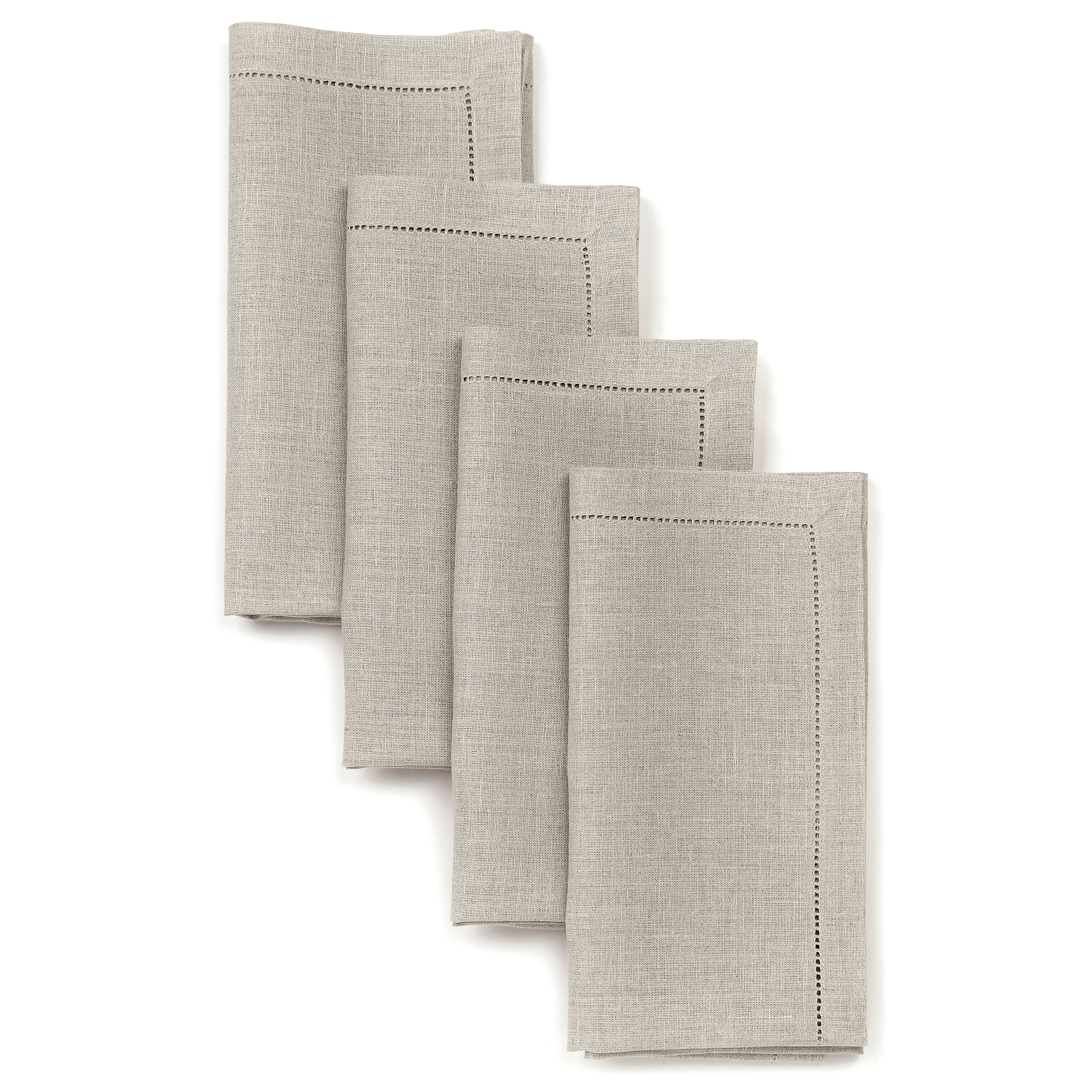
Black napkins need even less embellishment.

Their impact comes primarily from contrast. Against pale plates and natural woven chargers, a simple fold or understated ring is often all that is necessary.
Think Beyond Orange and Black
Once rust and black establish the foundation, Halloween becomes much more interesting when other colors are allowed into the table.
Burgundy and wine tones deepen the palette beautifully. Ivory keeps dark settings from becoming too severe. Eucalyptus and muted greens bring freshness, while brass and antique gold introduce warmth.
Rather than trying to match every element exactly, repeat colors loosely across the setting. A burgundy flower can echo the wine in a glass. An ivory pumpkin can relate to the dinnerware. A black taper can connect visually with a dark napkin several places away.
The eye notices repetition even when the objects themselves are completely different.
This is what makes a table feel composed rather than coordinated.
Let Halloween Details Appear Gradually
Skulls, spiders, ghosts and cobwebs absolutely have a place on a Halloween table. The difference is in how they are used.
Instead of making one large themed centerpiece, distribute the details across the setting. Let a small skeleton sit unexpectedly beside a candleholder. Place a spider close to the edge of a placemat. Nestle a skull among dark flowers. Allow a miniature ghost to appear between pumpkins.

When these pieces are surrounded by beautiful linen, flowers, dinnerware and candlelight, they feel playful rather than novelty-driven.
And there is something particularly charming about allowing guests to discover details gradually rather than presenting everything at once.
Build the Center of the Table in Different Heights
Halloween centerpieces benefit from a little irregularity.
Start low with foliage, pumpkins or trailing branches. Add flowers at a middle height, then use taper candles to take the eye upward. The variation makes the table feel abundant without requiring one oversized arrangement.
Dark roses and burgundy blooms feel particularly at home here. Their colors have enough drama for Halloween while still behaving like flowers rather than props.
Keep the tallest pieces narrow enough that guests can still see one another across the table. A spectacular centerpiece loses some of its charm if everyone has to lean around it to have a conversation.
Save Some of the Drama for After Dark
A Halloween table should ideally change as the evening does.
During daylight, rust linen reveals its texture and warmth. Black feels graphic and crisp. Individual pumpkins, branches and decorative objects are easy to notice.
After sunset, the hierarchy changes.

The darker elements begin to disappear into the surroundings while glassware, pale plates and candle flames move forward. Rust becomes deeper. Metallic surfaces grow warmer. Shadows become part of the setting.
For outdoor dining, extend that light beyond the table with lanterns or small candles at ground level. It makes the tablescape feel connected to the garden or terrace rather than isolated in the center of it.
A Little Drama Is the Point
The appeal of a Halloween table lies in being able to do things you might not consider at any other time of year.
Use the black tablecloth. Choose the rust napkins. Light more candles than usual. Put a skeleton beside the flowers. Let the cobweb stretch between two candlesticks.
But give those details a strong foundation.
When the linens establish the color, texture and proportion of the table first, everything playful that follows feels more intentional.
Halloween does not need to be frightening to be atmospheric. Sometimes it is simply a beautifully dressed table, seen after dark, with just enough mischief hidden among the candlelight.